
The objectives of the trip included:
- Exercising the board’s governance and oversight responsibilities by learning about how U.S. Co-ops partners with funders, government officials and local actors to help communities capture economic opportunity.
- Spending time with and supporting leaders from both the Dominican Republic cooperative sector and government officials who are seeking to advance the policy environment for cooperatives.
- Deepen the understanding of how the U.S. could more effectively use the cooperative business model by learning from cooperators in a different context.
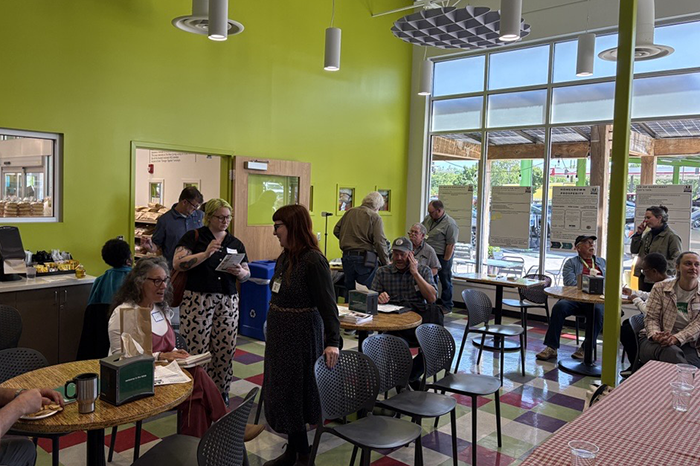
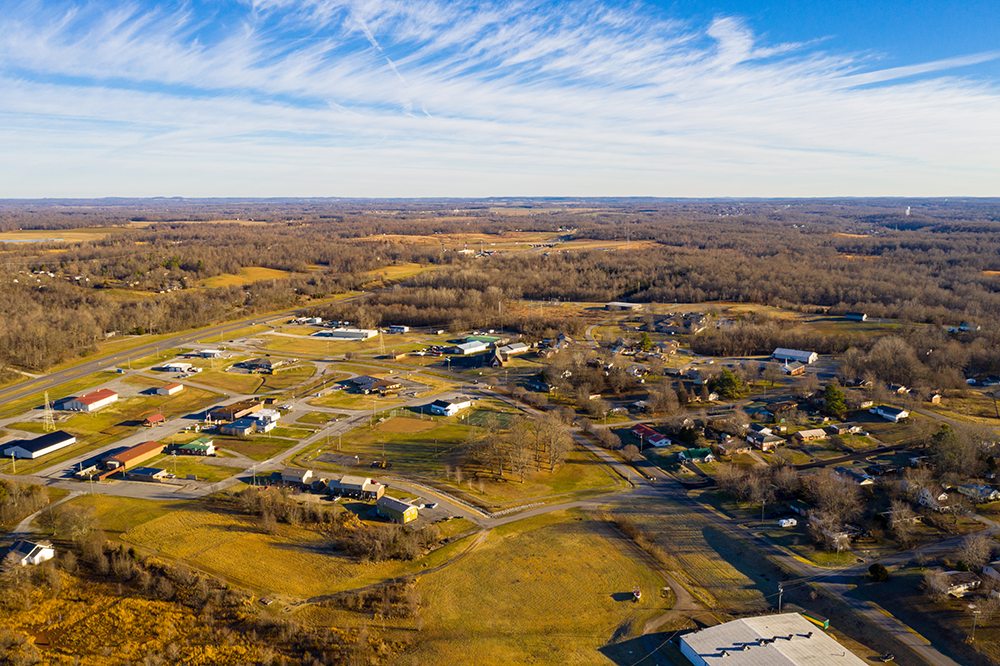
Participants included Carla Decker, chair of U.S. Co-ops’s Board of Directors and CEO of SkyPoint Federal Credit Union, and Doug O’Brien, president and CEO of U.S. Co-ops. Decker and O’Brien were joined by five other board directors: Sylandi Brown, Communications Manager of the U.S. Overseas Cooperative Development Council; Juan Fernandez, president and CEO of the Credit Union Association of New Mexico; Christina Jennings, Executive Director of Shared Capital Cooperative; David Swanson, attorney at Dorsey & Whitney, LLP; and Deborah Wege, Cooperative Community Advocate at BECU. The delegation also included representatives from U.S. Co-ops member Organic Valley, Jim Wedeberg and Silvia Abel-Caines; representatives from U.S. Co-ops partner GENEX, Marcel Petrutiu and Christa Hoffman; Alex Serrano, Senior Vice President of International Programs at U.S. Co-ops; and Cesáreo Guillermo, Chief of Party for U.S. Co-ops in the Dominican Republic.
On April 19, the delegation spent time with U.S. Co-ops staff and partners in dialogue about two projects that U.S. Co-ops is leading in the Dominican Republic: the U.S. Department of Agriculture (USDA)-funded Safe Agriculture/Food Export (SAFE) program, known locally as Progana; and the U.S. Agency for International Development (USAID)-funded Resilient Agriculture Activity.
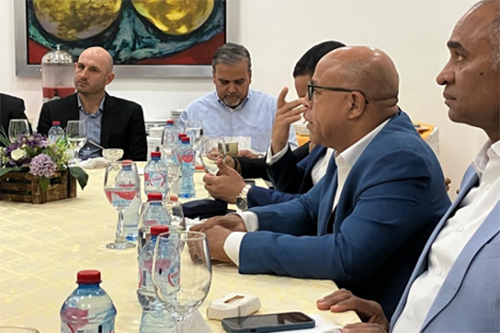
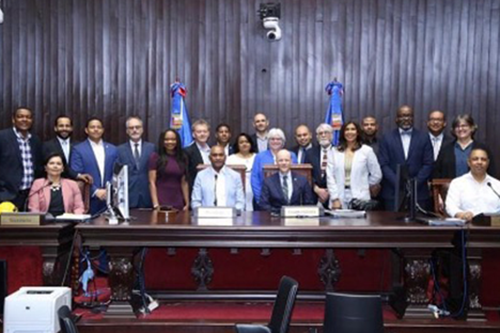
On April 20, the U.S. Co-ops delegation met with senior leaders in the Dominican Republic’s National Assembly (analogous to the U.S. Congress), including Alfredo Pacheco, president of the lower chamber (analogous to the Speaker of the House) and Julito Fulcar, who also serves in the leadership of the National Assembly. Mr. Fulcar is a long-time leader of the cooperative movement including the Dominican Republic’s apex co-op association, Conacoop.
The National Assembly is considering broad based cooperative policy informed by recommendations from an analysis known as CLARITY 2.0 conducted by U.S. Co-ops focused on the cooperative policy ecosystem of the country. Throughout the day, the delegation engaged with Eufrasia Gómez, Executive President of Conacoop, and Franco de los Santos, the President-Administrator of the Institute for Cooperative Development and Credit, which is the national agency charged with cooperative development and research.
The U.S. Co-ops delegation also participated in a co-op public event on Thursday called, “U.S. Cooperative Sector Experiences and Contributions to the U.S. Economy.” Hosted by the National Institute for Credit and Cooperatives (IDECOOP), the event drew more than 200 participants including key cooperative leaders from the Dominican Republic.
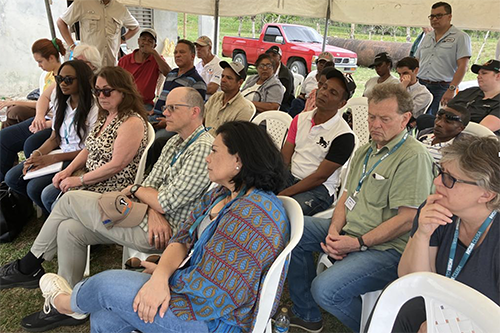
Closing out the visit, the delegation traveled to farms in the Hato Mayor and El Ceibo regions and meet with partners heading up U.S. Co-ops’s work in the country and get a first-hand look at the projects’ interventions. Both Progana and RAA utilize a train-the-trainer approach known as farmer field schools. While on site, the U.S. Co-ops delegation was able to participate in a training on low-cost techniques to increase cattle herd productivity.